- English
- Español
- Português
- русский
- Français
- 日本語
- Deutsch
- tiếng Việt
- Italiano
- Nederlands
- ภาษาไทย
- Polski
- 한국어
- Svenska
- magyar
- Malay
- বাংলা ভাষার
- Dansk
- Suomi
- हिन्दी
- Pilipino
- Türkçe
- Gaeilge
- العربية
- Indonesia
- Norsk
- تمل
- český
- ελληνικά
- український
- Javanese
- فارسی
- தமிழ்
- తెలుగు
- नेपाली
- Burmese
- български
- ລາວ
- Latine
- Қазақша
- Euskal
- Azərbaycan
- Slovenský jazyk
- Македонски
- Lietuvos
- Eesti Keel
- Română
- Slovenski
- मराठी
- Srpski језик

How Lightweight WPC Hollow Square Profile Supports Modern Construction
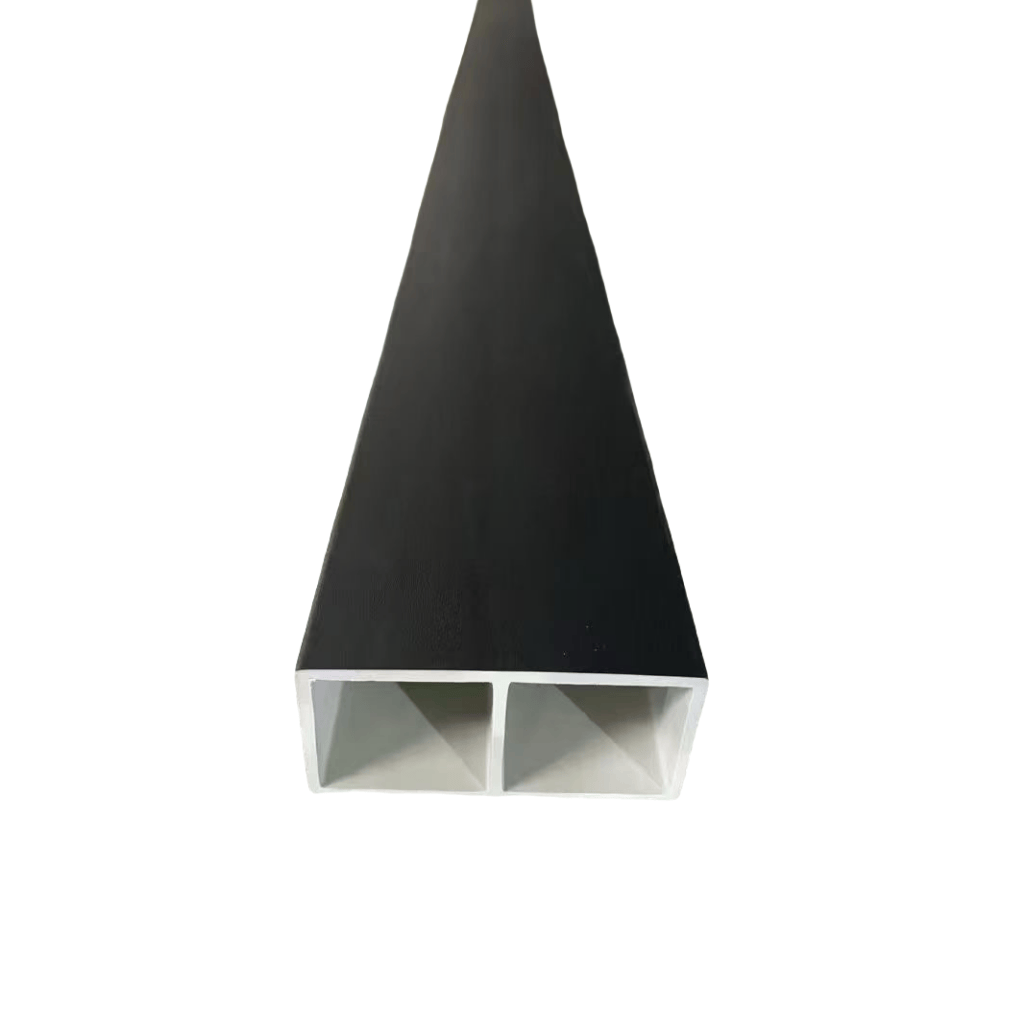
Lightweight WPC Hollow Square Profile is becoming an important material option in modern construction as the building industry continues to explore alternatives to traditional wood and conventional structural materials. Combining wood fibers with thermoplastic polymers, wood-plastic composites offer a different approach to material design. Their hollow cross-sectional structure can reduce material consumption while providing practical advantages for a variety of architectural and decorative applications.
Understanding the Structure of WPC Hollow Profiles
Wood-plastic composite, commonly known as WPC, is generally manufactured by combining wood flour or wood fibers with thermoplastic materials such as polyethylene, polypropylene, or PVC. Additional additives may be incorporated to improve processing characteristics, color consistency, weather resistance, and dimensional stability.
The square profile design creates a hollow interior surrounded by composite walls. Compared with a solid profile of similar external dimensions, this configuration can reduce overall material usage and product weight. The actual structural performance depends on wall thickness, internal geometry, material formulation, and manufacturing precision.
Why Lightweight Design Matters in Construction
Weight is an important consideration in building material selection. Lighter components can be easier to transport, handle, position, and install. In projects involving multiple decorative or architectural elements, reducing individual component weight may also simplify certain installation procedures and improve material handling efficiency.
Lightweight WPC Hollow Square Profile applies this principle through its hollow structure. Rather than filling the entire cross-section with composite material, the internal cavity helps reduce material usage while maintaining a defined external shape. This design approach can be useful in applications where moderate mechanical performance and reduced component weight are important considerations.
Applications in Modern Architectural Projects
WPC hollow square profiles can be used in several areas of construction and outdoor design. Common applications include decorative partitions, garden structures, fencing components, outdoor screens, ceiling features, and selected architectural framing elements.
In outdoor environments, composite materials are often considered because they can offer better resistance to moisture-related deterioration than untreated natural wood. Their appearance can also be adapted through surface textures, colors, and finishing techniques. These characteristics make them relevant to projects that combine functional components with visual design requirements.
Lightweight WPC Hollow Square Profile may also support modular construction concepts. Standardized profile dimensions can simplify cutting, assembly, and coordination between different components. In suitable designs, hollow sections may provide space for concealed wiring or other integrated elements, provided that the profile configuration and installation requirements support such use.
Manufacturing and Material Performance
Extrusion is a common manufacturing process for producing WPC profiles. During production, wood-based fillers, polymers, and additives are mixed and processed under controlled temperature and pressure conditions. The material is then shaped through a die to create the required cross-sectional geometry.
Consistent manufacturing is important for maintaining dimensional accuracy, surface quality, and wall thickness. Variations in raw material composition, processing temperature, cooling conditions, and extrusion speed can influence the finished profile. Quality evaluation therefore considers both appearance and physical properties.
For construction applications, relevant performance factors include flexural strength, impact resistance, dimensional stability, moisture absorption, thermal expansion, and long-term weathering behavior. Fire performance is another important consideration, particularly in buildings subject to specific fire safety regulations.
Sustainability and Material Selection
The development of WPC materials is also connected with broader discussions about resource efficiency and sustainable construction. Depending on the formulation, some composite products incorporate recycled plastics or wood-processing by-products. Hollow profile designs can further reduce the amount of material required for certain applications.
However, the environmental performance of a WPC product cannot be determined by recycled content or weight alone. Factors such as raw material sourcing, manufacturing energy, transportation, service life, maintenance requirements, and end-of-life disposal all contribute to its overall environmental impact.
Looking Ahead: The Role of Lightweight Composite Profiles
Modern construction increasingly requires materials that balance functional performance, design flexibility, installation efficiency, and resource considerations. Advances in composite formulations, extrusion technology, and profile engineering are creating additional possibilities for lightweight building components.
As architectural projects continue to explore alternative material solutions, Lightweight WPC Hollow Square Profile represents one approach to combining composite material technology with efficient cross-sectional design. Its role in modern construction will depend on application requirements, engineering evaluation, manufacturing consistency, and the development of more resource-conscious building practices.